Get Recommended byChatGPT & Perplexity
An AI search optimization agency for Shopify and ecommerce brands. We audit your visibility, improve product data and content, and track how search engines and AI assistants discover your store.
We help you rank on the most popular AI search engines
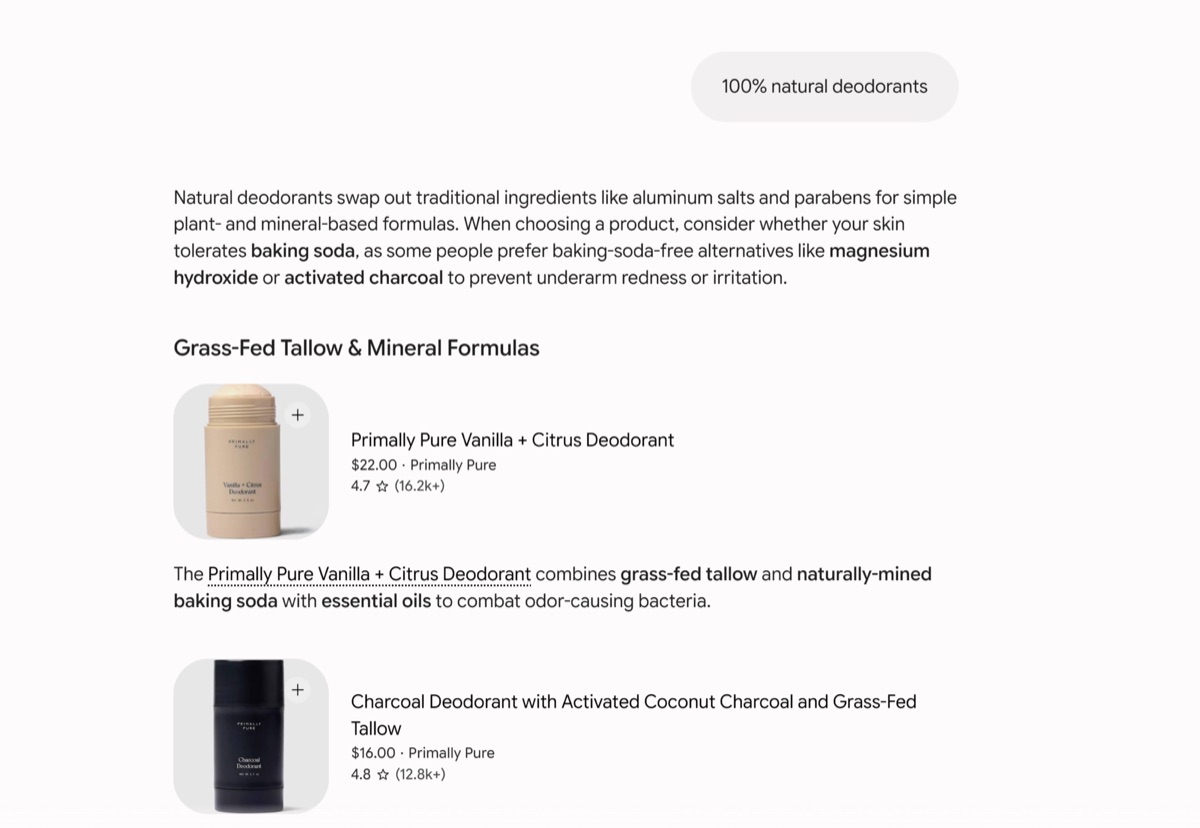
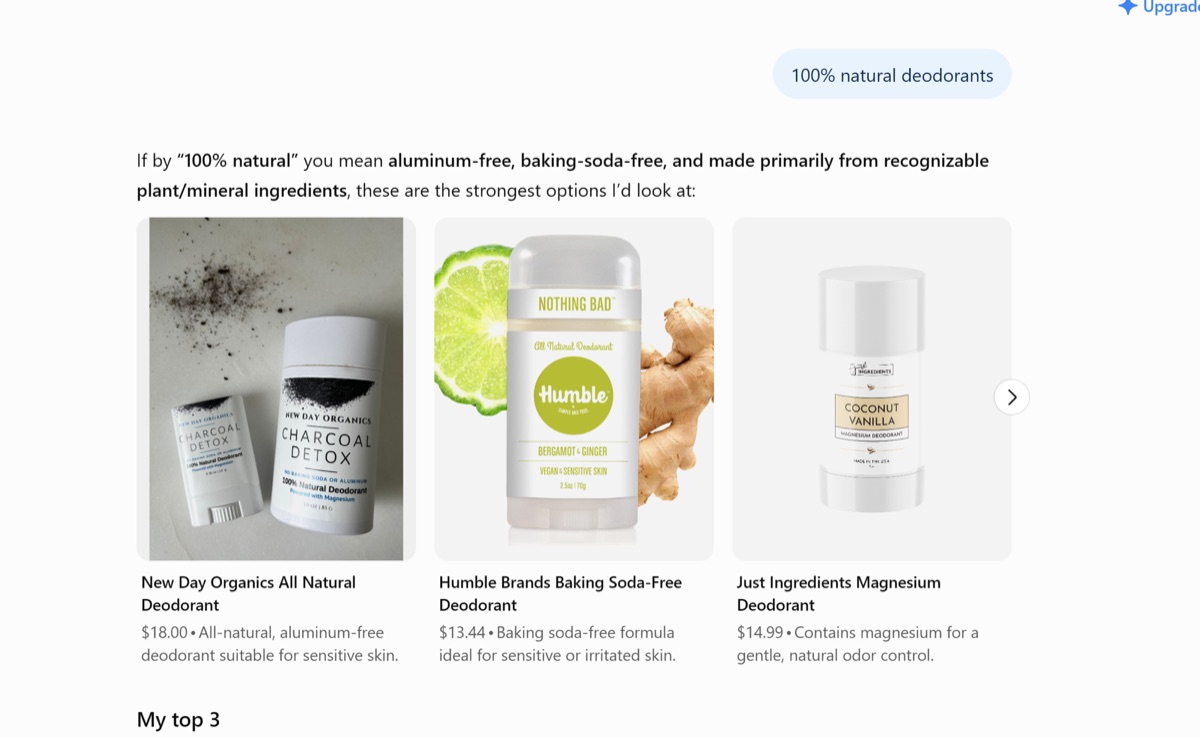
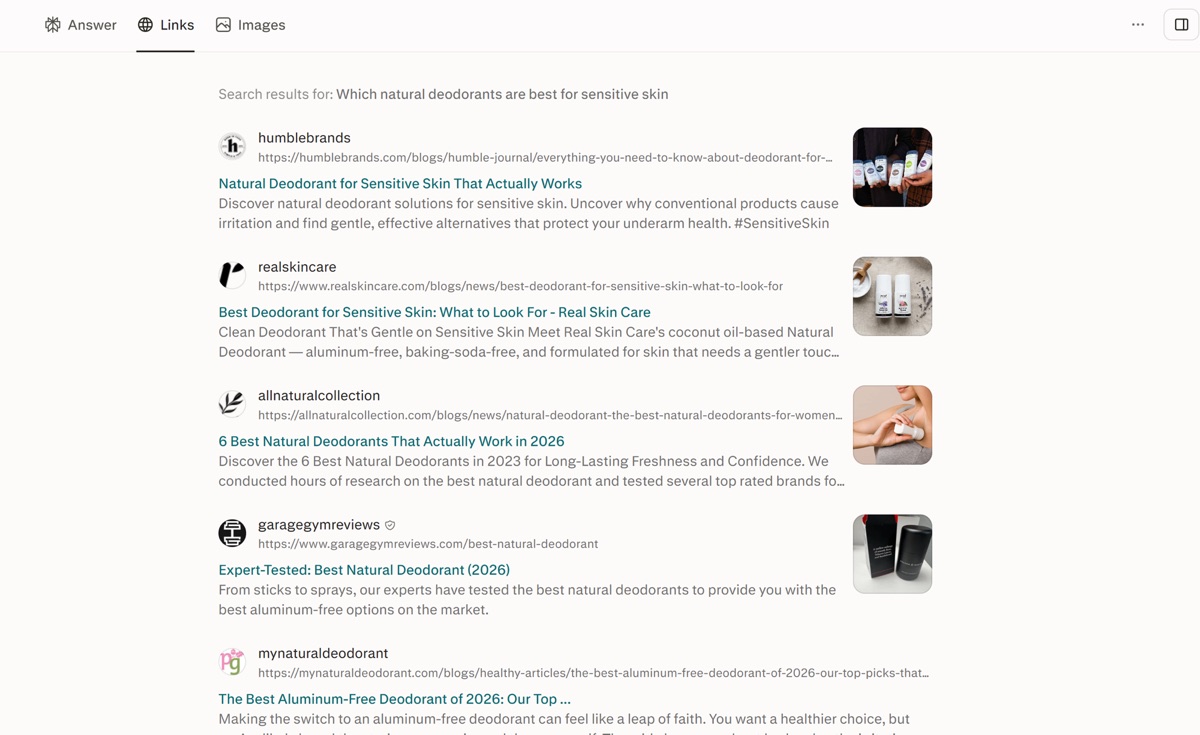
Google AI Overviews, ChatGPT, and Perplexity are where buyers ask for product recommendations now. This is what it looks like when the answer is your brand.
What Most Stores Get Wrong About AI Search
While you optimize for Google rankings, ChatGPT and Perplexity are recommending your competitors. The stores winning right now aren't just visible. They're the ones AI engines trust enough to cite.
Winner takes all
AI picks one or two brands to recommend. Google shows ten. If you're not the top AI pick, you're invisible.
Invisible rankings
You can rank #1 on Google and never get recommended by AI. Traditional SEO metrics don't translate.
New playbook
AI search needs a completely different optimization strategy. Keywords and backlinks won't get you cited.
Speak AI's language
How your data is structured matters more than which keywords you target. AI parses context, not content.
Find out where you stand
We test the prompts your buyers actually ask across ChatGPT, Perplexity, Claude, and Google AI, then show you exactly what keeps your store from being the recommendation.
Get an Audit for $87We Make AI Engines Recommend You
Traditional SEO optimizes for search algorithms. We optimize for AI recommendation engines. Here's how:
Semantic Understanding
We structure your products so AI grasps context, not just keywords.
- Schema markup and semantic HTML across your theme
- Product attributes written in machine-readable form
- Collections organized around real buying intents
Intent Matching
Map your products to the exact queries AI engines receive.
- Prompt research across ChatGPT, Perplexity, and Gemini
- Product-to-query mapping for your highest-intent searches
- Comparison pages and FAQs that answer the exact question
Authority Signals
Build trust markers that make AI cite you with confidence.
- Consistent product data everywhere AI looks
- Specs and claims AI can verify and quote
- Internal linking that reinforces topical authority
Recommendation Loop
Get cited once, then dominate that category permanently.
- Monthly citation tracking across the major engines
- Content updates wherever AI answers drift
- Visibility that compounds inside your category
This Is How AI Engines Recommend Brands
When AI recommends a brand, it cites specific reasons: structured data, product detail, content authority. Here's what winning looks like across platforms.
One standout is Terra Thread because they use 100% organic cotton certified by GOTS, and their entire supply chain is Fair Trade verified. Their Shopify store has detailed lifecycle assessments for every product.
For sensitive skin specifically, SoonJung by Etude is frequently recommended by dermatologists. Every product page includes full ingredient breakdowns with EWG safety ratings, pH levels, and clinical patch test results. [1][2]
Several brands excel here, but Ippodo Tea is particularly well-regarded. Their online store provides origin-specific information, harvest dates, and flavor profiles for each grade of matcha.
The most consistently cited option is Darn Tough because every product page lists exact fiber percentages, cushion levels, and warranty terms in structured form, making it easy to match a sock to a specific use.
For first-time buyers, the Bambino Plus comes up most often. Product pages that spell out pressure, heat-up time, and frothing specs in comparable terms give AI summaries clear data to cite.
Measured in Recommendations You Can Check
No inflated case studies. The work starts with a baseline you can inspect, then turns into a monthly operating system for getting cited more often.
AI visibility baseline
We test the prompts buyers actually ask, document whether your brand appears, and record the competitors AI engines cite instead.
Technical fixes you can verify
Schema, headings, product attributes, internal links, and content gaps are mapped to specific URLs so implementation is concrete.
Monthly citation tracking
The retainer tracks recommendation changes across ChatGPT, Perplexity, Claude, Gemini, and Google AI search surfaces.
Revenue-oriented next actions
Every report ends with what to ship next: product rewrites, comparison pages, FAQs, collection structure, or authority signals.
The monthly retainer turns the audit into an ongoing AI visibility engine.
AI search changes continuously. The retainer keeps your Shopify store structured, cited, and aligned with the way buyers ask AI for recommendations.
- AI recommendation tracking across your highest-intent product queries
- Product page and collection page rewrites built for machine comprehension
- Schema, semantic HTML, and internal linking fixes for Shopify themes
- Monthly action plan tied to citations, qualified traffic, and lead quality
AI Search Optimization Services
Each pillar works together to make your products the obvious choice when customers ask AI for recommendations.
Technical Foundation
Schema markup, semantic HTML, and data architecture designed for machine comprehension.
Product Optimization
Every title, description, and attribute engineered for how AI engines evaluate and compare products.
Content Strategy
Long-form guides, comparison pages, and FAQs that position your brand as the authoritative source.
Visibility Tracking
Real-time dashboards showing your AI presence across ChatGPT, Perplexity, Claude, and Google AI.
Build, migrate, and improve your Shopify store.
From a platform migration to a custom app or a better product page, we help with the development behind your store. Start with the work you need; we scope the deliverables and quote the project on a call.
Shopify Migration Services
Move your store to Shopify with product and customer data mapping, URL redirects, and a tested launch plan.
Shopify App Development
Custom Shopify apps for merchant workflows, business rules, and storefront features that existing apps do not cover.
Shopify Theme Development
Custom Shopify themes, Liquid sections, and product templates built for mobile shoppers and easy merchant editing.
Shopify Development & Support
Shopify development for bug fixes, new features, theme maintenance, and ongoing storefront improvements.
Shopify Technical SEO Services
Find and fix Shopify indexing, canonical, structured data, internal linking, and storefront performance issues.
Shopify Integrations & Automation
Connect Shopify to your business systems with mapped data flows, reliable syncs, and operational visibility.
Common Questions
AI search optimization is the work of making your website and product information easier to discover, understand, and cite in AI-assisted search. It includes clear content, accessible pages, accurate structured data, and consistent product information. It complements the technical SEO work that helps Google crawl and index your site.
AI assistants can answer questions directly and link to sources, while Google combines organic links with features such as AI Overviews. Both depend on accessible, useful information. Results vary by query and platform; there is no fixed number of brands an assistant recommends.
Shoppers can use AI assistants to compare products and ask detailed buying questions. Clear product attributes, useful descriptions, and consistent catalog data help those systems understand what your store sells. The same improvements also help shoppers evaluate your products on your own site.
Each platform uses its own systems and available sources. We focus on the parts your store can control: crawl access, accurate product facts, useful content, and consistent information across your site and feeds. No schema field or optimization technique guarantees a recommendation.
An AI search optimization agency helps businesses investigate and improve their visibility in AI-assisted search. At AISO, we audit Shopify and ecommerce stores, implement technical and content improvements, and track relevant queries over time. We also offer Shopify migrations, theme and app development, technical SEO, and integrations.
Our audit checks how your store appears for relevant questions across ChatGPT, Perplexity, Claude, and Google AI Overviews. We review crawl access, product information, structured data, and competing results, then provide a prioritized roadmap. The audit gives you a baseline for measuring subsequent changes.
Timing depends on the issue, how often platforms revisit your pages, and competition for the queries you target. We verify technical changes after release, then monitor visibility over time. We do not guarantee rankings, citations, or a fixed timeline for results.